Whale shark encounters in Oslob, Cebu involve feeding wild sharks daily to guarantee sightings — a practice condemned by marine biologists for disrupting natural behaviour and harming the animals. Puerto Princesa’s whale shark tours are completely wild with no feeding, operating in the open ocean April–October. Oslob guarantees sightings year-round; Puerto Princesa offers ethical encounters with 70–90% sighting rates in peak season.
Both Oslob and Puerto Princesa are famous for whale shark encounters, and they’re frequently compared by travellers planning Philippines itineraries. The difference between them is not just logistical — it’s ethical, experiential, and environmental. This guide gives you the complete picture so you can make an informed choice.
What Is the Oslob Whale Shark Experience?
In Oslob, Cebu, local fishermen began hand-feeding whale sharks in 2011 to keep them in the bay for tourist encounters. Daily feeding sessions create near-guaranteed sightings because the sharks have become habituated to humans and dependent on supplemental food. Encounters take place in a shallow bay just offshore, with hundreds of swimmers in the water simultaneously alongside multiple whale sharks.
Oslob is accessible (3 hours from Cebu City), affordable at ₱1,000–1,500, and offers near-certain whale shark encounters any day of the year. It is also one of the most heavily criticised wildlife tourism operations in Southeast Asia.
What Marine Biologists Say About Oslob
Research published in peer-reviewed marine biology journals has documented consistent concerns:
- Whale sharks in Oslob have altered migration patterns — they no longer follow natural food sources and remain artificially dependent on feeding stations
- Skin lesions and propeller injuries are documented at significantly higher rates in Oslob’s shark population due to constant boat and swimmer proximity
- The supplemental diet disrupts natural nutritional intake — plankton-based feeding is replaced by shrimp paste
- The density of swimmers (frequently 100+ simultaneously) creates conditions that violate every international guideline for responsible whale shark interaction
The World Wildlife Fund, Whale Shark Research Programme, and IUCN Shark Specialist Group all recommend against visiting whale shark feeding operations. The Oslob encounter exists because the animals have been conditioned to it — not because it represents a natural encounter.
Puerto Princesa: Wild, Ethical, Open Ocean
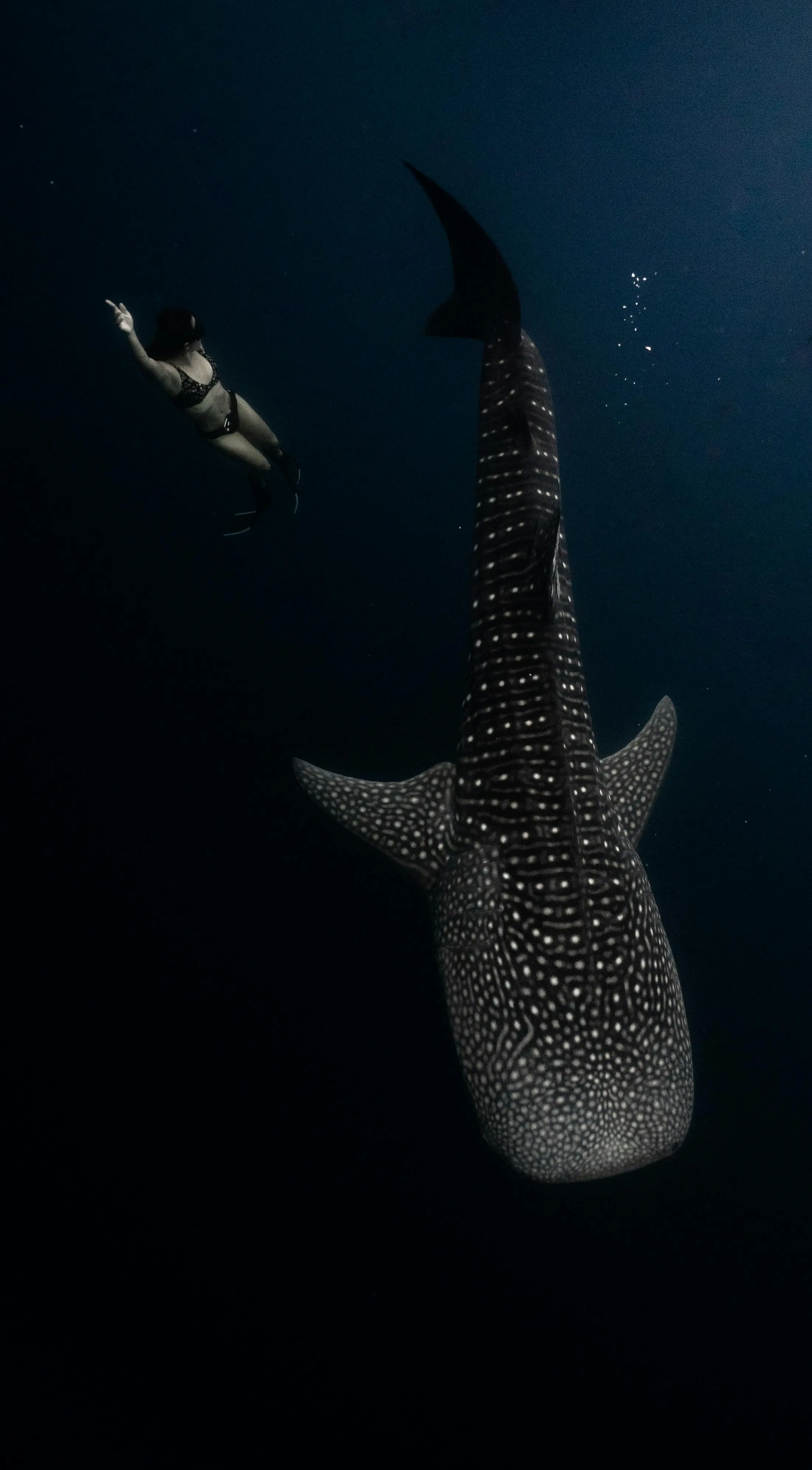
In Puerto Princesa, whale sharks are encountered in their natural habitat — open ocean, following seasonal plankton blooms, completely wild and unhabituated. Tour Z’s 30ft speedboat reaches the wildlife zone in 20 minutes, with experienced spotters locating sharks from the surface via drone.
Encounters follow IUCN guidelines throughout: minimum 3 metres from the body, 4 metres from the tail, no flash photography, passive observation only. The whale sharks control every interaction — they choose whether to stay near the surface or dive.
Side-by-Side Comparison
| Factor | Oslob, Cebu | Puerto Princesa (Tour Z) |
|---|---|---|
| Feeding | Yes — daily artificial feeding | ✓ No feeding. 100% wild. |
| IUCN Compliant | No | ✓ Yes |
| Sighting rate | ~99% (conditioned animals) | 70–90% in peak season (wild) |
| Shark health | Documented injuries & disease | ✓ Wild, healthy population |
| Crowd level | 100+ swimmers simultaneously | ✓ Max 12 guests per tour |
| Season | Year-round (fed daily) | April–October (wild season) |
| Additional wildlife | Whale sharks only | ✓ Wild dolphin pods included |
| Price | ₱1,000–1,500 | ₱3,500 all-inclusive (hotel pickup, drone, lunch, permits) |
Our Recommendation
If your travel dates fall between April and October, Puerto Princesa is unambiguously the better choice — ethically and experientially. Swimming alongside a whale shark that has chosen to surface near you is fundamentally different from entering water with a conditioned animal at a feeding station.
If your only available window falls outside Puerto Princesa’s whale shark season, consider Donsol in Sorsogon — the original responsible whale shark tourism site in the Philippines, also completely wild and IUCN-compliant.
Frequently Asked Questions
Is the Oslob whale shark experience ethical?
No. Oslob’s operation is widely condemned by marine biologists and conservation organisations. Daily artificial feeding disrupts migration, creates dependency, and has been linked to physical injury and disease in the shark population. IUCN guidelines explicitly prohibit feeding in whale shark tourism.
When is whale shark season in Puerto Princesa?
Whale sharks are typically present April to October, peaking June–August when plankton blooms are most concentrated. Tour Z operates with a 2-in-1 Success Guarantee — 25% refund if only one species is encountered, 50% if neither.
How likely am I to see a whale shark in Puerto Princesa?
Sighting rates are 70–90% during peak season (June–August). Tour Z’s 30ft speedboat allows rapid repositioning and uses aerial drone spotting — unlike bangkas that spend most of their time just travelling to the zone.
Is Puerto Princesa whale shark tourism 100% wild?
Yes. Tour Z uses zero feeding, zero bait, and zero chum on any departure. Sharks are located by drone from above and approached calmly once spotted. Every encounter is genuinely wild.
Ready to experience the ethical alternative? Book the Tour Z whale shark expedition →